
Category Archives: Telecom

Network as a Platform

It has been over 22 years that an executive from SUN Microsystems stated that “The Network is the Computer”. However, I would infer that this statement only made sense when applications started to move into the Cloud. With that transition, the “Network” has become what supports applications, i.e. an Operating System. It is therefore relevant to consider the Network as a Platform, which is what all successful OS have become. And this is the exact positioning that telcos have been looking for in the digital game.

Today’s networks work like single-purpose computers

If you would like to set up a corporate network today, and would like to avoid running it over the Internet, your preferred telco will sell you a single-purpose network custom-configured to your needs. This is pretty much the same as when editors were buying typewriters, which were essentially single-purpose computers: hard to upgrade, operating as standalone, just waiting for deprecation.
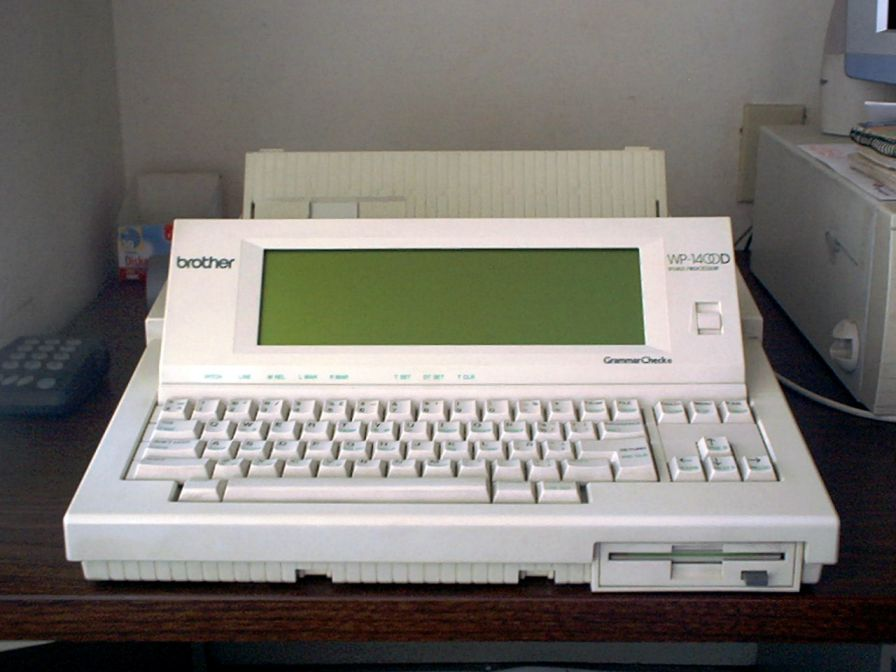
This is what a typewriter looked like (c. 1994)

Now that your corporate network is set up, optimised for your needs and budget, try to add a cloud application:

  • most will settle for VPN or https connections to the chosen cloud provider. But if you send your data flows over the Internet, why have a corporate network in the first place ? This is where the threat really lies with OTT (Over-the-top providers).
  • the richer ones will buy dedicated links to the cloud provider, and run a 6-month integration project to get an exclusive network-engineered access to their beloved cloud application. Expensive and not really easy to setup. Add such access to another 4 or 5 cloud providers, and you’ll have fun, guaranteed.
  • use a Cloud Exchange. Almost there, but they come with their own set of drawbacks.

A Cloud Exchange is like running MS-DOS

A Cloud Exchange is basically an enhanced router that will link you to a vast number of Cloud providers on-demand. Companies such as Equinix took care of connecting to hundreds of such provider. You just need to connect to the exchange, access the management console and configure the link between your network and the cloud provider.

Although a cloud exchange is a great step forward toward using the network as the platform supporting your Cloud applications, it is not quite perfect:

  • you usually need to buy a hosting service in the same datacenter as the exchange, before being able to access to it;
  •  you still need to engineer the data flows yourself, and it is easy to create a bottleneck if you settle for just one connection point;
  • There is a limited number of IT managers who can configure the cloud exchange for their company. not great when a business unit just wants to access their cloud application — they might not tell the IT department and will end up with insecure access clogging the Internet gateway;
  • last but not least, you are still the integrator: you configure the exchange, you order your cloud service separately, you pay two separate invoices (one to the cloud exchange provider, another one to the cloud provider), and of course you are the ping pong ball between the two providers’  customer support centres.
C-edit-config-sys
This is what MS-DOS looked like

All in all, Cloud Exchanges feel a lot like using MS-DOS, for those who know what it meant (c’mon, it’s not that old). Lots of configuration tweaking and debugging nights. Let’s say it is a glimpse to what Network as a Platform could do.

Putting the user experience back in the game

As a corporate user, all I would like is to subscribe to a cloud service, and let the network configure itself “auto-magically”. Obviously the telco’s and the IT department’s network and security rules could be taken into account, if any.

Let’s say that I am at the office using Salesforce. It is not hard for the network to recognise my session as a Salesforce session, and route it adequately over a telco-operated Cloud Exchange. Technologically, there is no reason why this cannot be done. Indeed, Network as a Platform is all about partnerships and strategic vision.

Implementing Network as a Platform

To implement Network as a Platform, all it takes to a network operator is:

  • to define a wholesale API that cloud providers can use to trigger a network reconfiguration whenever the business customer asks for it. There are secure ways to do so and it allows secure connectivity on-demand between the corporate network and the cloud provider.
  • to leverage existing routing capabilities in the MPLS backbone, and later with SDN, to route the flows to each Cloud provider as required.
  • to convince the cloud providers to interconnect to the telcos’ networks. This is arguably the hardest part, as Cloud providers don’t like to deal with network access. Large telcos will have an edge in convincing the cloud powerhouses to open up. Others should get access to the datacenter without much effort, but might have to pay for a long distance link to reach it. Either way, the associated costs will ultimately be factored in into the wholesale services sold to the Cloud provider, and paid for by the end customer.

Network as a Platform is the way to avoid network commoditisation

As explained before, there is little incentive to run a corporate network when all the apps are accessed through the Internet. Therefore, if telcos want to avoid consumer-grade pricing of their corporate network services, they should market it as a platform, much like the Operating System of the cloud: provide interfaces (API) to cloud services providers, and get out of the way when the customers wants to access an app.

Note to myself: were I in charge of a telco’s future, I would rest uneasy realizing how little the effort to standardize my network interfaces with cloud service providers.

PS: telcos like acronyms — let’s talk about NaaP : Network as a Platform. 🙂

How can MNOs deal with the Apple SIM

This has been barely noticed during the last Apple keynote, but the next wave of iPhone 6s will feature an optional monthly plan to pay for the device. Apple has massive amounts of cash out of the US, which it is not in a hurry to repatriate, so it clearly has the deep pockets for such a strategy globally. All this will come with something already seen on the last iPad: the Apple SIM. Now that Apple is taking over the distribution of mobile subscriptions, Mobile Network Operators (MNO) may rightfully feel threatened to be dwarfed into a last mile provider, while Apple rips the profits of distributing mobile plans. But this is not a done deal: there are ways that MNO may fight back. So, how can MNOs deal with the Apple SIM ? Here are a few ways to explore.

What is the Apple SIM ?

Before moving forward on this topic, let’s be more specific about what we are talking about. The Apple SIM is nothing new conceptually, at it operates like a technology called eUICC — all on a standard SIM package. eUICC is fully standardized by the GSM Association, and sold by leading vendors such as Gemalto.

In short, the eUICC technology allows for reconfigurable SIM cards with the help of cloud technologies. You may know that your SIM card embeds the private crypto-key of your mobile provider — one that allow to uniquely identify you on the network. On a traditional SIM, this private key is hardware-coded on a chip, which is a highly secure way to distribute it in millions of SIM while still keeping it unreadable (the way the key is used in mobile auth protocols is beyond this article).

In the case of the eUICC, an entity called “service manager” securely and remotely pilots the private key in use inside the chip. This allows two nice features:

  • the MNO can be reconfigured in your device remotely, without any physical interaction;
  • once this tech is widely accepted by MNO, you actually don’t need a SIM card anymore: an eUICC module could be soldered anywhere on your phone’s motherboard — which saves space and makes design more simple.

In the Apple SIM, as you may have guessed, Apple is the service manager of the SIM, and the MNOs are back to their main role in the chain: mobile service providers.

Why eUICC is a big deal for MNOs ?

Mind you, Mobile Network Operators already use the eUICC technology: in M2M applications, where you need global coverage for thousands of devices scattered all over the country, including in rural areas, it could be nice to get coverage from just the telco that’s there. Some connected electricity counters, for example, may be reconfigured to connect to the network with the best signal wherever it stands, without having to manage a stock of SIM cards and manually insert them on the field. It was also chosen by the EU in its connected car recommendation. Actually, all the main MNOs have signed up for the eUICC standard by the GSMA.

What MNOs are worried about is the use of eUICC in the B2C space, because it is disrupting the distribution of the mobile plans. There are two issues at stake here:

  1. Telcos have traditionally developed an extensive retail distribution network through a large number of self-branded stores, which are either self-owned or franchises — and they are turning useless;
  2. A service manager with significant market power might extract more value than what MNOs currently pay for acquiring customers. Apple might fall in that category, as it “owns” the premium segment (80% market share for devices above $300). Apple also showed in the past that it is not scared to impose stringent conditions on telcos that just want to distribute its phones (although it hurt its competitors more than the telcos actually).

The end of MNO retail stores

Sure, the eUICC makes the retail store irrelevant, as distribution happens online (through a portal managed by the service manager). But as it stands, the store is already largely irrelevant in mobile distribution, for at least four reasons:

  • Online stores are already on the rise, if only for price comparison. You may still buy your SIM in the store because you don’t want to wait for delivery, but you choose your offer online anyway. In many developed countries, the customer does not buy a phone plan, it buys a mobile device with a consumer credit. Find the best offer online, and the store no longer “sells” you anything, it is just part of the logistic chain.
  • MNO stores were once relevant when offers where complicated and people did not know how to insert a SIM in their phones. But it turns out that complexity have decreased and customers have become more tech-savvy. This makes the store pretty much useless on two of its main missions.
  • In many mature markets, prices declined sharply, which leaves less money to pay for a brick&mortar distribution channel. A retailer used to make up to €250 for acquiring a new customer with a 2-year commitment. This is no longer possible when unlimited (unsubsidized) plans run at €20/month, as is the case in some countries. Add a subsidy worth €20/mo, and pay the distributor the equivalent of €10/mo for a 2-year commitment, and it sells for €50/mo instead of €20/mo. When you are 2.5x times more expensive than the standard offer, you are targeting a niche, at best. Most likely, irrelevance is at the doorstep.
  • In many countries, the market share of plans without commitment have increased drastically. For example, in France, 2/3 plans are not under commitment any more — up 100% in the last few years. Although one clear driver
    has been competition and the launch of a 4th MNO, it is also the result of a longer lifetime of the smartphone. The following chart by mixpanel.com shows that iPhone 4/4s/5, launched 3 to 5 years ago, still account for roughly 40% of users in the US. With a churn rate of 30-35% in pospaid, this confirms that people now change plans more often than devices.
iPhone mix 2014
Evolution of iPhone mix in App user base. source: mixpanel.com

In brief, it is fair to say that the lower utility factor of MNO stores is not a result of the eUICC, but rather the logical result of endogenous factors. The danger of eUICC is that the irrelevancy of retail stores is brutally translated in facts: nobody needs to get a SIM in the store anymore. Plus, should customers want to remain in brick&mortar channels, why would they tie themselves to one single MNO brand ? It used to be for the subsidy, but if this can be had from the device manufacturer, why bother ?

Focus on the customer, not the channel

The main recommendation to MNO is not to fight the eUICC tidewave, but rather to embrace an “adopt and adapt” strategy:

  • MNO need to rethink their retail strategy. Customers no longer need these stores as such, therefore they should either find another “raison d’être”, or prepare to close them altogether. New missions could be to service defect phones, sell used/reconditioned devices, solve specific customer problems as a differentiator, etc. All this requires different skills than what’s currently in place.  But without proper repositioning, MNO should start shortening lease agreements, sell stores to franchisees, and stop operating retail stores altogether.
  • MNO need to work on the best way to acquire customers on the eUICC’s service manager portals. There is clearly an opportunity to work with Apple on this, as this would legitimate its technology. MNO need to define the most attractive offers (subsidy or price ? / Unlimited vs segmentation, etc.) and marketing strategies for this channel.
  • MNO need to focus fully on customer satisfaction, and upsell ! Although Apple can influence the choice of a carrier, it does not control which plan is used at any given time by a user. If the MNO sells a low-cost plan at first, it could increase its margin by converting the user to a higher-end tier. The example of FreedomPop in the US is striking, as it is able to convert a large number of freemium customers to a paid offer by optimizing its communication to the enrolled users. MNO should allow self-configuration through an easy application on the device to combine unlimited usage and budget control.

All in all, the best way to shine in the eUICC world is to be desired by the customer. This, Apple cannot fight, or at its own expense. MNO can shield themselves against abuse of power from Apple by learning to use this new distribution channel fully, instead of entering a dogmatic war against it — which at the end is a war against the user’s experience.

As Apple will start to subsidize its own devices, MNO should anticipate the associated extra cash flow — as they will subsidize less devices. Up to them to invest in customer experience, or to take the short-sighted path of exceptional dividends…