


It has been over 22 years that an executive from SUN Microsystems stated that “The Network is the Computer”. However, I would infer that this statement only made sense when applications started to move into the Cloud. With that transition, the “Network” has become what supports applications, i.e. an Operating System. It is therefore relevant to consider the Network as a Platform, which is what all successful OS have become. And this is the exact positioning that telcos have been looking for in the digital game.
Today’s networks work like single-purpose computers
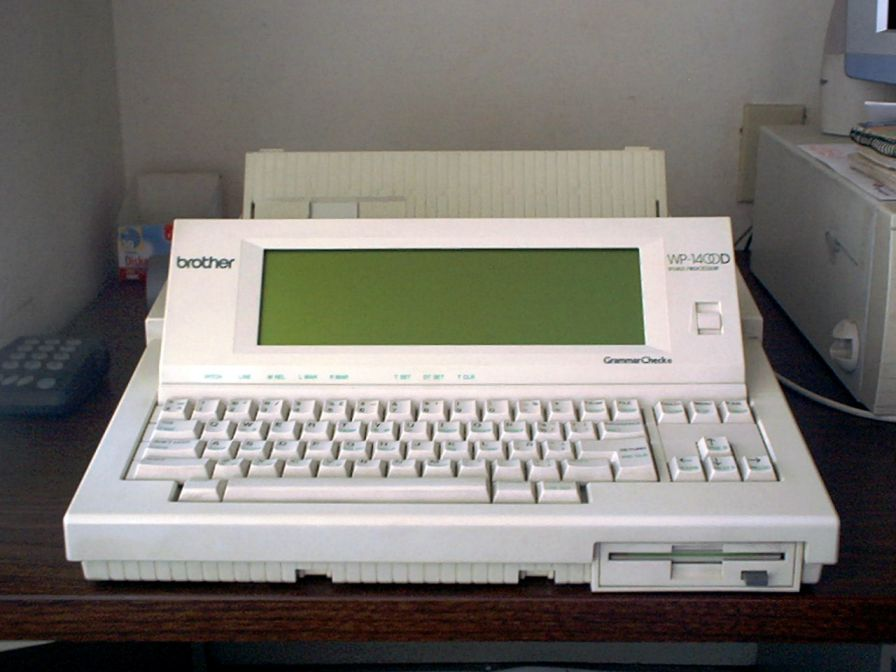
If you would like to set up a corporate network today, and would like to avoid running it over the Internet, your preferred telco will sell you a single-purpose network custom-configured to your needs. This is pretty much the same as when editors were buying typewriters, which were essentially single-purpose computers: hard to upgrade, operating as standalone, just waiting for deprecation.
Now that your corporate network is set up, optimised for your needs and budget, try to add a cloud application:
- most will settle for VPN or https connections to the chosen cloud provider. But if you send your data flows over the Internet, why have a corporate network in the first place ? This is where the threat really lies with OTT (Over-the-top providers).
- the richer ones will buy dedicated links to the cloud provider, and run a 6-month integration project to get an exclusive network-engineered access to their beloved cloud application. Expensive and not really easy to setup. Add such access to another 4 or 5 cloud providers, and you’ll have fun, guaranteed.
- use a Cloud Exchange. Almost there, but they come with their own set of drawbacks.
A Cloud Exchange is like running MS-DOS
A Cloud Exchange is basically an enhanced router that will link you to a vast number of Cloud providers on-demand. Companies such as Equinix took care of connecting to hundreds of such provider. You just need to connect to the exchange, access the management console and configure the link between your network and the cloud provider.
Although a cloud exchange is a great step forward toward using the network as the platform supporting your Cloud applications, it is not quite perfect:
- you usually need to buy a hosting service in the same datacenter as the exchange, before being able to access to it;
- you still need to engineer the data flows yourself, and it is easy to create a bottleneck if you settle for just one connection point;
- There is a limited number of IT managers who can configure the cloud exchange for their company. not great when a business unit just wants to access their cloud application — they might not tell the IT department and will end up with insecure access clogging the Internet gateway;
- last but not least, you are still the integrator: you configure the exchange, you order your cloud service separately, you pay two separate invoices (one to the cloud exchange provider, another one to the cloud provider), and of course you are the ping pong ball between the two providers’ customer support centres.

All in all, Cloud Exchanges feel a lot like using MS-DOS, for those who know what it meant (c’mon, it’s not that old). Lots of configuration tweaking and debugging nights. Let’s say it is a glimpse to what Network as a Platform could do.
Putting the user experience back in the game
As a corporate user, all I would like is to subscribe to a cloud service, and let the network configure itself “auto-magically”. Obviously the telco’s and the IT department’s network and security rules could be taken into account, if any.
Let’s say that I am at the office using Salesforce. It is not hard for the network to recognise my session as a Salesforce session, and route it adequately over a telco-operated Cloud Exchange. Technologically, there is no reason why this cannot be done. Indeed, Network as a Platform is all about partnerships and strategic vision.
Implementing Network as a Platform
To implement Network as a Platform, all it takes to a network operator is:
- to define a wholesale API that cloud providers can use to trigger a network reconfiguration whenever the business customer asks for it. There are secure ways to do so and it allows secure connectivity on-demand between the corporate network and the cloud provider.
- to leverage existing routing capabilities in the MPLS backbone, and later with SDN, to route the flows to each Cloud provider as required.
- to convince the cloud providers to interconnect to the telcos’ networks. This is arguably the hardest part, as Cloud providers don’t like to deal with network access. Large telcos will have an edge in convincing the cloud powerhouses to open up. Others should get access to the datacenter without much effort, but might have to pay for a long distance link to reach it. Either way, the associated costs will ultimately be factored in into the wholesale services sold to the Cloud provider, and paid for by the end customer.
Network as a Platform is the way to avoid network commoditisation
As explained before, there is little incentive to run a corporate network when all the apps are accessed through the Internet. Therefore, if telcos want to avoid consumer-grade pricing of their corporate network services, they should market it as a platform, much like the Operating System of the cloud: provide interfaces (API) to cloud services providers, and get out of the way when the customers wants to access an app.
Note to myself: were I in charge of a telco’s future, I would rest uneasy realizing how little the effort to standardize my network interfaces with cloud service providers.
PS: telcos like acronyms — let’s talk about NaaP : Network as a Platform. 🙂